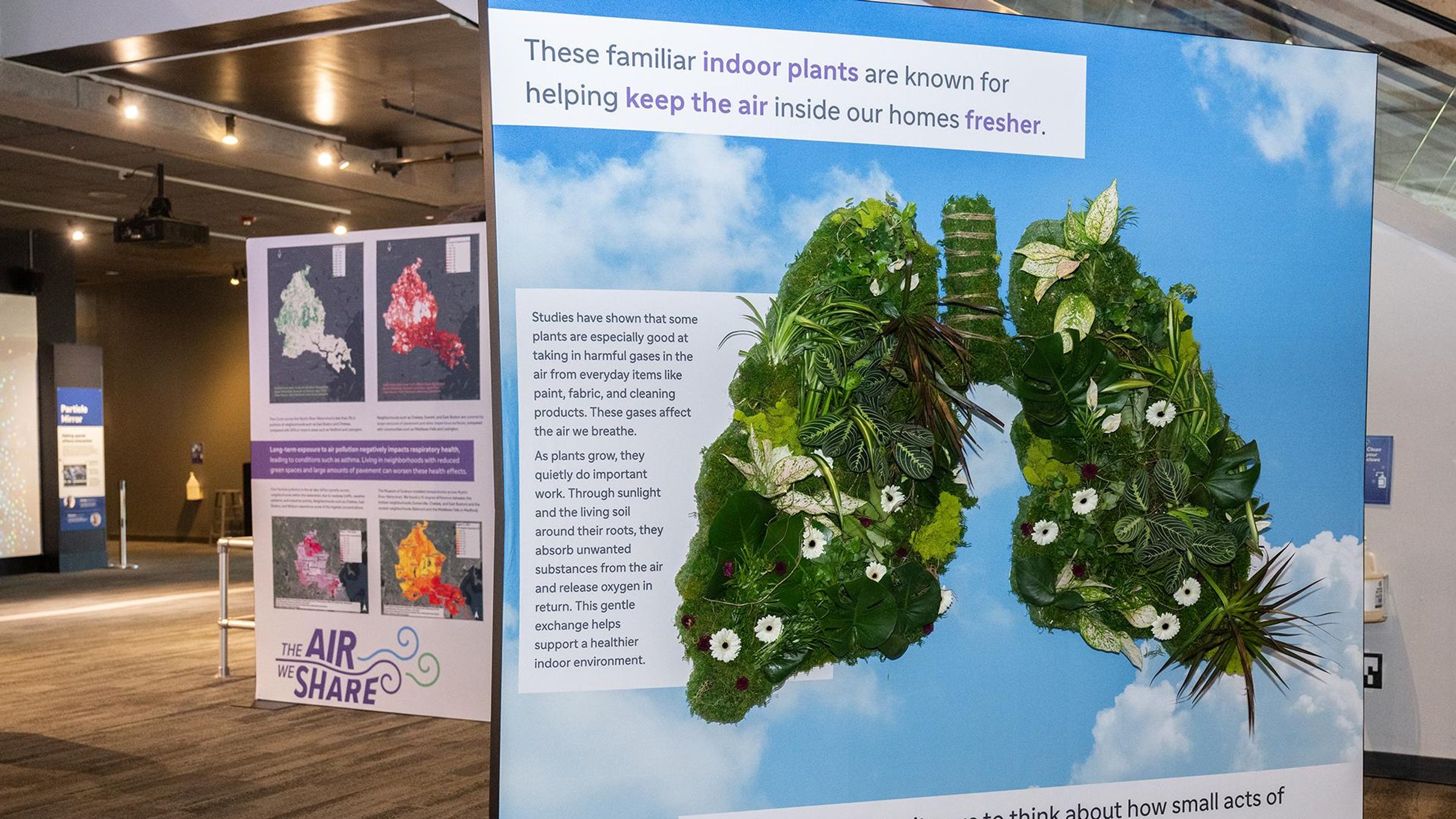
This interactive display showcases how everyday houseplants absorb harmful gases from paint, fabric, and cleaning products while quietly releasing fresh oxygen. It's a beautiful reminder that nature and wellness go hand in hand—and that small choices about the air around us can make a real difference.
This interactive display showcases how everyday houseplants absorb harmful gases from paint, fabric, and cleaning products while quietly releasing fresh oxygen. It's a beautiful reminder that nature and wellness go hand in hand—and that small choices about the air around us can make a real difference.
The Air We Share
As part of Sanofi’s STEMulate Growth commitment, we’re helping young people and communities explore how the environment impacts our health, while expanding access to and interest in STEM learning and careers.
The Air We Share is a national partnership between Sanofi and the Association of Science and Technology Centers (ASTC)’s Seeding Action, that helps communities understand how environmental factors like air pollution, wildfire smoke, and extreme heat affect respiratory health.
By working with science centers and museums across the United States, the program brings trusted, science-based information directly to communities, providing them with practical ways families can protect their health and make informed everyday decisions.
Breathing is more tied to the environment than we think
Every breath we take is shaped by the world around us. The air we breathe, whether affected by pollution, smoke, or extreme heat, can have a direct impact on our health, especially our lungs.
The Air We Share is designed to help make that connection visible, so individuals and communities can better understand the risks and take action to protect their health.
Want to learn what you can do? Check out the Frequently Asked Questions section.

Anchored Locally, Connected Nationally
Three leading science institutions serve as anchor partners—helping guide program development, support collaboration, and share learnings across the network:
- The Franklin Institute – Philadelphia, PA
- Museum of Science – Boston, MA
- Liberty Science Center – Jersey City, NJ
In addition, 11 science centers and museums from across the country will join the cohort, receive funding, program resources, and access to scientific experts.
Together, these institutions will design and deliver programming to educate children in grades K-12 through a variety of museum activations and community events.
Rooted in Data
The Air We Share is grounded in research that highlights both growing concern about air quality and a clear need for more accessible, actionable information.
Recent national research conducted through a collaboration between ASTC and Sanofi reveals a significant gap between awareness and action when it comes to air quality and health. These findings underscore the need for trusted, community-based programs that translate concern into meaningful action, an opportunity The Air We Share is designed to address.
87%
of parents are concerned about how air quality impacts their family’s health
63%
believe their children have already experienced negative health effects from poor air quality
Only 37%
regularly check air quality reports
84%
say they want to do more to protect their families
86%
want to learn more about the causes and impacts of poor air quality
Meet Lungston
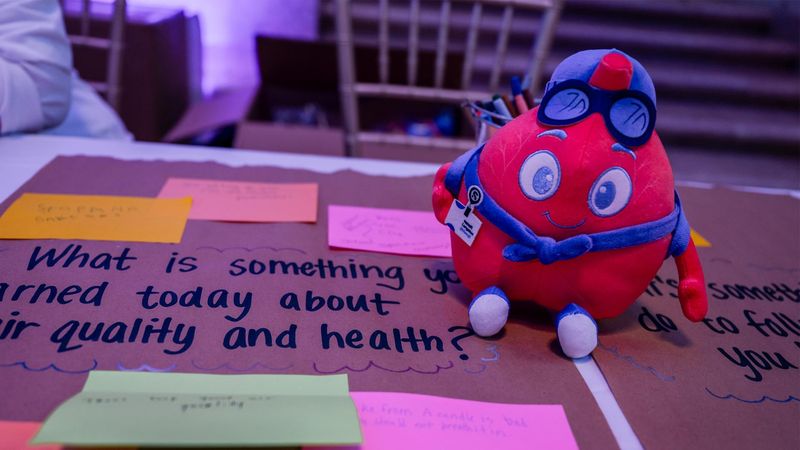
Lungston is our newest Sanofi Employee, a friendly lung-shaped character, designed to make complex science about air quality and respiratory health accessible and engaging, especially for younger audiences.
Lungston will be traveling to museums all across the country. You will see him in exhibits, signage, and interactive experiences to help children and families understand how their lungs work, what’s in the air they breathe, and how to take simple steps to protect their health.
Hi, I’m Lungston! I’ll be helping young learners explore how the air we breathe affects our lungs, our health, and our communities.
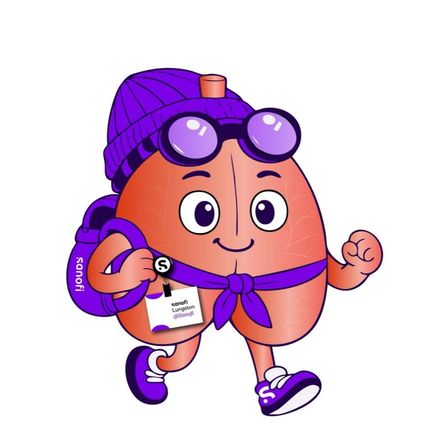
Lungston
Educational Guide, The Air We Share
How Air Impacts Your Respiratory Health
Your lungs process over 2,000 gallons of air every day¹
This is enough to fill a swimming pool! The quality of that air directly affects your respiratory health and overall well-being.
Wildfire smoke can travel hundreds of miles from its source²
This affects air quality in communities far from the fires themselves and can cause respiratory symptoms even indoors.
Indoor air quality matters too³
Pollutants from outdoor air can enter homes and buildings, but simple actions like closing windows during poor air quality days and using air filtration can help protect your family.
Children are more susceptible to air pollution⁴
Their lungs are still developing, causing them to breathe more rapidly than adults.
Air pollution can trigger or worsen respiratory conditions⁵
Including asthma, bronchitis, and other lung diseases, with children and older adults particularly vulnerable.
Take the Next Step
Have questions about air quality and respiratory health? Explore answers to common questions and practical steps you can take to help protect yourself, your family, and your community.
Frequently Asked Questions
If I want to use a mask to protect myself from air pollution, how do I know if I'm getting the right mask, and how should I use it?
Choose a well-fitting N95 or KN95 mask, which filters at least 95% of harmful airborne particles. Cloth and surgical masks provide limited protection against air pollution.
Ensure your mask creates a secure seal around your face. The EPA recommends checking your local Air Quality Index (AQI) and considering a well-fitting N95 respirator if you must be outside when air quality is in the Unhealthy categories. Children under age 2 should never wear a mask.
Learn more through:
- How to Tell if Your N95 Respirator is NIOSH Approved
- Tips for Finding a Safe KN95 Mask
- How to Use Your N95 Respirator (CDC)
Note: There are no N95 respirators specifically certified for children. Older children may be able to wear an adult N95 respirator if it fits properly and forms a secure seal. Younger children should wear KN95 masks that are specifically designed, sized and tested for children.
How do I choose an air purifier, and how should I use it?
Look for an air purifier with a HEPA filter or use MERV 13 or higher filters in your home's HVAC system. Choose a purifier that matches the size of your room and replace filters according to the manufacturer's recommendations.
Avoid air purifiers that generate ozone. If purchasing a purifier isn't possible, consider building a DIY Corsi-Rosenthal Box, an effective and affordable alternative.
For additional guidance, see the California Air Resources Board's Safe and Effective Air Purifier List.
How can I avoid polluting the air in my home or other buildings?
Indoor air can often be more polluted than outdoor air. Improving indoor air quality starts with simple everyday habits:
- Don't smoke indoors.
- Properly vent gas appliances and fireplaces.
- Use cleaning products as directed and provide ventilation when possible.
- Limit exposure to harsh chemicals.
- Regularly replace HVAC filters.
- Test smoke and carbon monoxide detectors.
Learn more in The Inside Story: A Guide to Indoor Air Quality from the EPA.
How can I reduce the amount of outdoor pollution I create?
Small everyday choices can make a meaningful difference.
Consider:
- Walking, biking, or using public transportation.
- Reducing unnecessary vehicle idling.
- Choosing renewable energy when available.
- Reducing waste and buying secondhand when possible.
- Planting trees and supporting community green spaces.
How can I protect myself and others from extreme heat?
Extreme heat can worsen air quality and increase health risks, especially for children, older adults, and people with underlying health conditions.
Stay safe by:
- Limiting outdoor activity during peak heat.
- Drinking plenty of water.
- Staying in cool indoor spaces whenever possible.
- Checking on vulnerable family members and neighbors.
- Learning the signs of heat-related illness.
For more information, see Heat and Health from the World Health Organization.
How can I prevent wildfires?
If you live in a wildfire-prone area, you can help reduce wildfire risk by following local burn restrictions, clearing dry vegetation around your home, and never parking vehicles on dry grass.
Supporting community wildfire preparedness efforts and prescribed burns can also reduce future wildfire risk.
Learn more in 10 Tips to Prevent Wildfires from the U.S. Department of the Interior.
How can I help collect data about air quality?
Community air quality monitoring helps scientists and neighbors better understand local conditions.
You can:
- Install an indoor or outdoor air quality monitor.
- Share data through community monitoring networks like PurpleAir.
- Participate in local citizen science projects.
Learn more through Choosing a Site and Installing Air Sensors (EPA) and SciStarter.
How can I protect the most vulnerable members of my community?
Children, older adults, people with heart or lung conditions, outdoor workers, and communities with fewer resources are often more affected by poor air quality.
You can help by sharing AQI alerts, providing masks or transportation to clean air spaces, and encouraging schools, community centers, and other public buildings to improve indoor air filtration.
How can I talk to others about the importance of air quality?
When discussing air quality, focus on practical actions people can take rather than overwhelming statistics. Share simple ways to protect health, improve local air quality, and inspire others through your own actions.
For ideas on talking with children, see Why Is Coco Orange? from the EPA.
How can I advocate for policies that improve air quality?
Long-term improvements in air quality require both individual action and community leadership.
You can:
- Learn about local air quality issues.
- Support organizations working on clean air.
- Contact your elected officials.
- Advocate for cleaner transportation, expanded green spaces, and improved access to healthcare.
- Helpful resources include Ballotpedia, Find Your Representative, Contacting U.S. Senators, Meet the Mayors, and the Writing Letters to Elected Officials guide.
Download our guide for additional information, resources, and practical tips.
Explore More
The Air We Share: Our 2026 Journey Through Science and Community
In 2026, The Air We Share brought air quality and respiratory health education to museums and science centers nationwide, from Boston to Philadelphia to Jersey City and beyond. See how the program grew, hear from the people behind it, and discover what is coming in 2027.

Bringing The Air We Share to Communities
Sanofi and the Association of Science and Technology Centers are bringing The Air We Share to science centers nationwide to help families and young people turn air quality concerns into action.

About the ASTC Partnership
The Air We Share, a partnership between Sanofi and ASTC’s Seeding Action initiative, supports science centers and museums in the United States to engage with their local communities on the ways that environmental challenges like air pollution, wildfires, and extreme heat affect human health.
The Air We Share Data Report
A national survey of parents in the US showed a gap between concern about air quality and action to protect children’s respiratory health.
STEMulate Growth
STEMulate Growth is Sanofi’s overarching commitment to advance inclusion in STEM learning for students in historically under supported communities across the U.S.
References
- American Lung Association. How Your Lungs Work. https://www.lung.org/blog/how-your-lungs-work
- California Air Resources Board. Smoke Ready CA. https://ww2.arb.ca.gov/smokereadyca
- U.S. Environmental Protection Agency. Improving Indoor Air Quality. https://www.epa.gov/indoor-air-quality-iaq/improving-indoor-air-quality
- American Lung Association. Who Is at Risk from Outdoor Air Pollution. https://www.lung.org/clean-air/outdoors/who-is-at-risk
- National Institute of Environmental Health Sciences. Air Pollution. https://www.niehs.nih.gov/health/topics/agents/air-pollution