Designing More Inclusive Clinical Trials Through Artificial Intelligence and Community Partnership
Imagine being prescribed a medicine and wondering whether it has been studied in people with your background, health history, or life experience. For many patients, those questions still go unanswered — and they matter, because understanding how medicines work across different populations is essential to advancing safe, effective care for everyone.
For Kasey Boynton, Senior Director of Global Operations and Community Partnerships Lead at Sanofi, this reality became deeply personal. "Several years ago, my mom had a pulmonary embolism that almost ended her life," Kasey recalls. "When I looked at the clinical trial and safety profile of the medicine prescribed to her, there was limited data available that reflected older patients with multiple health conditions, including those from historically under-supported communities. So I asked the doctor, 'How do we know this medicine will not cause my mom more harm?' And he replied, 'We don't.'"
That moment crystallized everything. It's the reason Kasey shows up every day — and the reason she built SCAN.
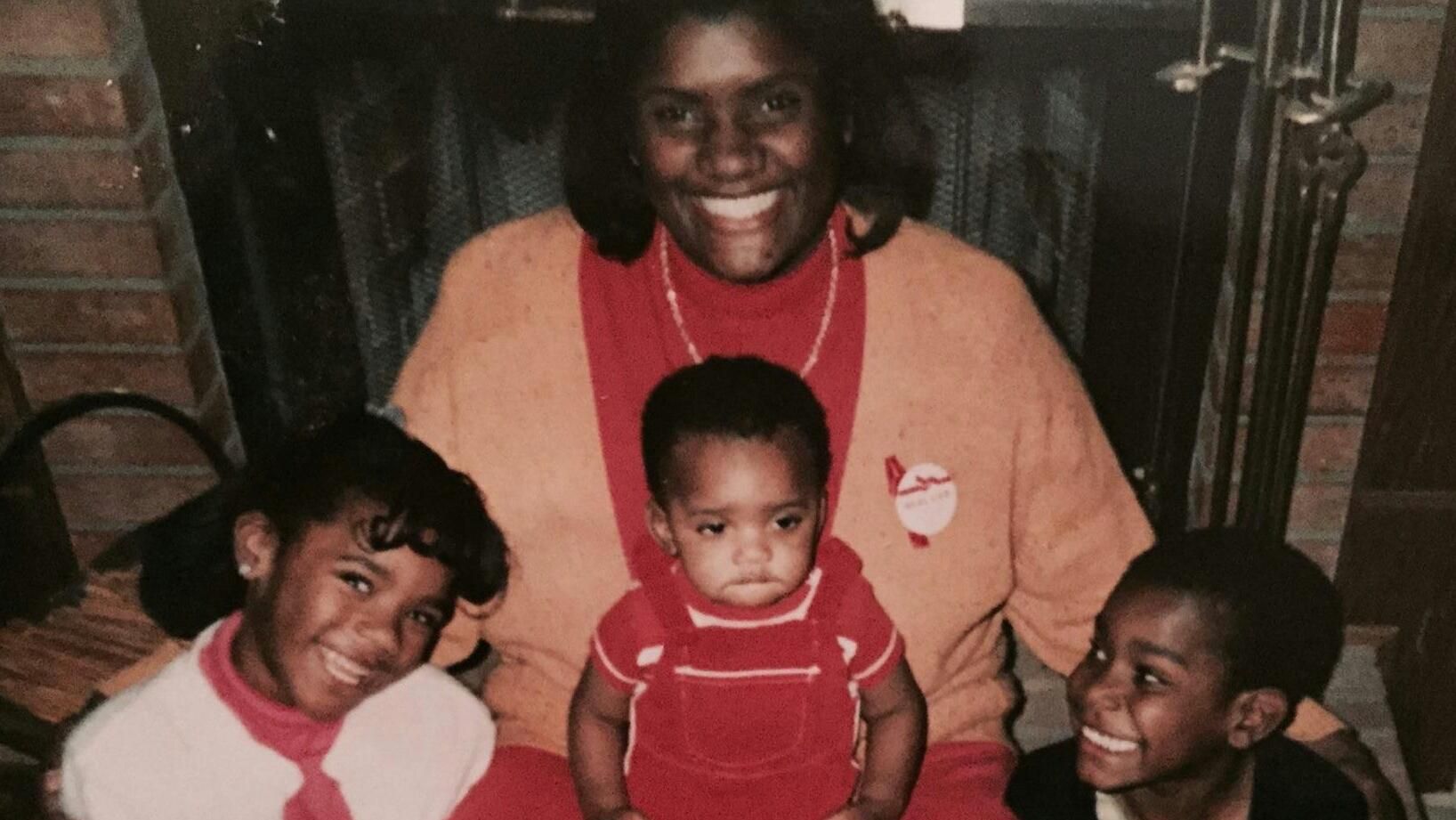
Kasey, her mother and siblings.
A Network Born from Listening
The Sanofi Community Alliance Network (SCAN) didn't start in a meeting room. It started with listening.
During discussions with physicians serving as Principal Investigators, Kasey heard a consistent theme: sites were committed to making clinical research more accessible and engaging historically under-supported communities, but often lacked practical guidance on how to do so. Layer that onto research showing that 55% of potential clinical trial participants say lack of awareness is their primary barrier to trial participation, and the gap became impossible to ignore.
"I saw an opportunity to create a solution," says Kasey. So she did.
What Is SCAN — and What Makes It Different
Today, SCAN is a global, purpose-built capability that combines cutting-edge AI technology with community-centered outreach to transform clinical trial access. By using artificial intelligence to identify patient populations that could benefit from Sanofi medicines, SCAN addresses barriers that have historically limited participation in clinical research. It works locally and deeply within communities — educating people, raising awareness about the importance of clinical research and fundamentally redesigning how trials reach patients.
Three key differentiators set it apart: direct partnership with HCPs and Principal Investigators who show up alongside the SCAN team at community events to answer questions in real time; a sustainability-first model that teaches communities how to engage each other, creating lasting impact beyond any single event; and free health screenings that serve as a diagnostic bridge.
Underpinning it all is what Kasey calls a "high-tech, high-touch" approach: applying tactics that help identify and reach the right patients, while simultaneously building trust at the grassroots level. The results speak for themselves — sites that partner with SCAN are already exceeding their enrollment benchmarks, and survey results show that sites feel more engaged with Sanofi.
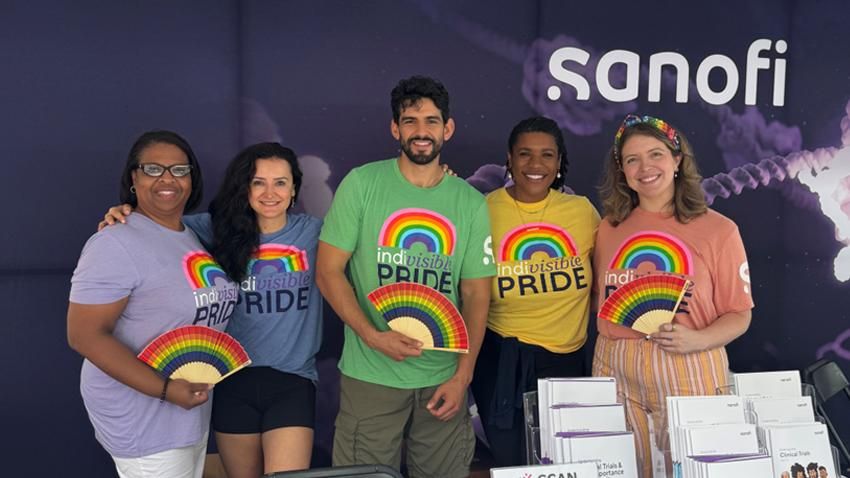
The SCAN team and PRIDE ERG came together to support 100 Sanofi colleagues in the Pride Parade, sharing important information about Atopic Dermatitis and asthma research with our community.
The "Engage, Educate, Excel" Framework
SCAN operates on three pillars: Engage, Educate, Excel.
Engage builds genuine relationships through consistent presence in trusted community spaces. Educate empowers people with accessible, culturally relevant knowledge about disease, treatment options, and why inclusive research matters. Excel delivers on promises — sharing results back with communities and building infrastructure that creates lasting value.
"Together, these three pillars transform clinical trial participation from a transactional ask into a reciprocal partnership," Kasey explains.
"This Is My Blessed Day"
Reflecting on the early days of SCAN, Kasey recalls a woman who approached a community table focused on skin conditions, supported by a local dermatologist. The woman shared that she had been living with eczema for years, affecting her sleep and relationships, and that she had never had access to specialty care and did not have health insurance. The dermatologist referred her to a free clinic, giving her access to specialty care she had never had before.
By the end of the conversation, she looked at the team and said: "This is my blessed day."
"I think about those words all the time," Kasey says quietly. "That moment reminded me that we don't always know the impact we're having in real time. Sometimes you think you're just piloting a program. And really, you're changing someone's life."
Redesigning the Infrastructure, Not Just the Outreach
SCAN's approach goes beyond awareness campaigns. It redesigns the trial infrastructure itself — not trying to fit historically under-supported communities into existing systems, but building systems that enable patient access from the ground up. Using a data-driven, evidence-based methodology, SCAN strategically targets the right patients for specialty care outreach, ensuring resources reach those who can benefit most from clinical research opportunities.
We're no longer asking, 'How do we get patients to fit into our trials?' We're asking, 'How do we design trials that work for more patients?' That's a profound change in mindset — and it's happening in real time.
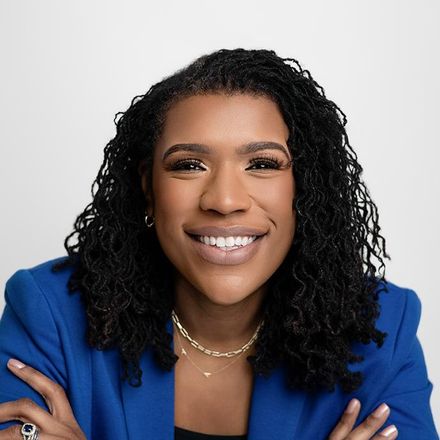
Kasey Boynton,
Senior Director of Global Operations and Community Partnerships Lead
The team works to anticipate the realities patients may face before, during, and after engaging with a clinical trial, and designs support mechanisms that reflect those needs.
One example of this approach is the development of a comprehensive patient support platform that leverages artificial intelligence and pulls real-world evidence (RWE) to deliver personalized, relevant resources. This AI-powered platform brings together resources such as caregiving support options, meal planning guidance, and symptom‑management information to provide tailored solutions that help patients navigate the broader experience of research participation. Importantly, these resources are not limited to enrolled participants; they are available to individuals who express interest in a trial, recognizing that even initial engagement can require meaningful support.
By integrating these considerations into trial design from the outset, SCAN helps create research experiences that are more responsive, more inclusive, and better aligned with the needs of specific patients and communities along their health journey.
"If we're asking communities to trust us," Kasey says, "the least we can do is support them from the very first moment they engage."
Together, these efforts reflect a broader shift in how clinical research is being approached — one that moves beyond recruitment metrics or outreach alone. For Kasey, this work reflects what it means to chase the miracles of science responsibly: ensuring that clinical trials are designed to reflect the patients they are ultimately meant to serve. By listening first, building partnerships within communities, and designing trial infrastructure with real‑world patient needs — as well as care, intention, and trust — at the center, SCAN is helping advance research that is both scientifically rigorous and more inclusive by design.
Explore More:
Designing Trials That Reflect Real Lives