Sanofi Supports Milken Institute Patient Advocacy Forum on Healthcare Access

By Eric Racine, Vice President & Head, US Public Affairs & Patient Advocacy
Every major change in healthcare ultimately reaches the same place: the patient. Scientific innovation is accelerating. Artificial intelligence is changing how people find and interpret health information. Health systems and payers increasingly shape how care is delivered and accessed. Yet progress can only have its intended impact when patients can benefit from it.
That is why Sanofi is proud to support the Milken Institute Patient Advocacy Forum in Washington, D.C. Convened by the Milken Institute, the Forum brings together patient advocacy organizations and professional societies with leaders from healthcare, research, policy, technology and other sectors to examine some of the forces changing the patient experience in the United States.
For Sanofi, supporting this conversation starts with listening.
Patient advocacy organizations see parts of the healthcare experience that no single company or institution can see on its own. Supporting the Milken Institute Patient Advocacy Forum gives us an opportunity to listen to those perspectives, learn alongside others across healthcare, and consider what they mean for how we work with patient communities.

Eric Racine
VP & Head, US Public Affairs and Patient Advocacy, Sanofi
Learning from the People Closest to the Patient Experience
Patient organizations have long played an important role in advancing research, changing public policy, improving access to care and helping healthcare systems better understand the realities patients and families face.
Their role continues to evolve. As healthcare decisions increasingly involve health systems, data, technology and new sources of information, an important question is emerging: How does patient influence evolve with them?
The Forum creates an opportunity to explore that question across organizations and sectors rather than from the perspective of any one company, disease area or part of the healthcare system.
Three Forces Changing the Patient Experience
Several themes throughout the Forum are especially relevant to our work at Sanofi.
Closing the distance between innovation and access
Ensuring patient perspectives are represented in AI and data
Considering the next chapter of patient advocacy
From Conversation to Action
Sanofi's role at the Forum is also part of a broader commitment to working with patient organizations throughout the year.
Across our therapeutic areas, our teams work with advocacy organizations and professional societies to better understand patient journeys, identify barriers to care and bring patient perspectives into our work. The value of a forum like this is the opportunity to hear across those individual relationships.
A challenge experienced in one disease community may point to a broader issue in the healthcare system. An approach developed by one organization may have lessons for others. And changes in technology, policy or care delivery may affect patients across many different conditions. Bringing those perspectives together helps all of us see the larger picture.
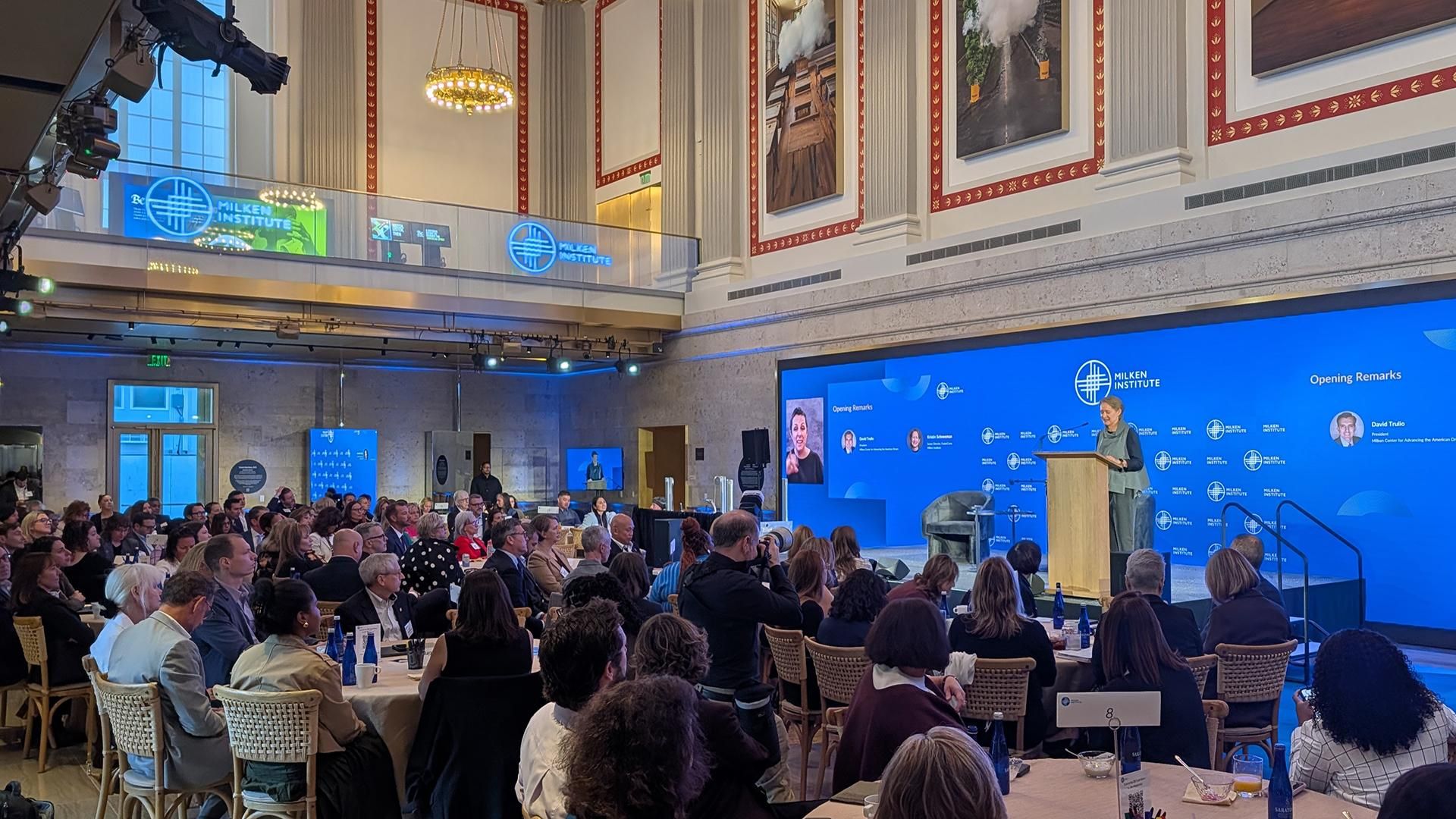
Throughout the Forum, patient advocacy leaders, health system experts, and innovators explored critical challenges facing patients today – from closing gaps between scientific innovation and access, to ensuring patient perspectives shape AI and data use in healthcare, to reimagining the role of advocacy organizations in an increasingly complex system.
What We Take Forward
For Sanofi, supporting the Milken Institute Patient Advocacy Forum is ultimately about learning. We want to understand where patient organizations believe the healthcare system is working, where patients continue to experience friction, and where new forms of collaboration may be needed. Those insights can help inform how we approach our own work and our partnerships with patient communities.
We chase the miracles of science to improve people's lives. Listening to the people those advances are intended to serve helps us better understand what it will take for scientific progress to translate into meaningful progress for patients.
Explore More

A People-Centered Approach