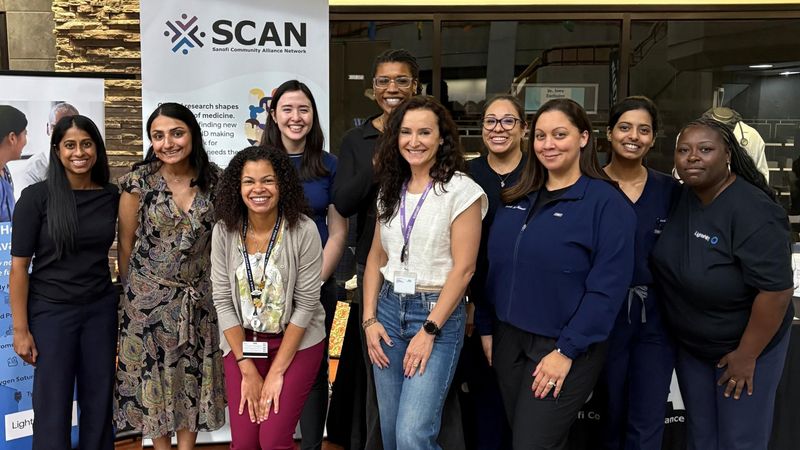
Sanofi Hosts Debate: Will AI Close or Widen Healthcare Access Gaps?

Will artificial intelligence close or widen the health gaps that have long affected historically under-supported communities? That question took center stage at the AfroTech Conference in Houston, Texas during HealthStack, the new health tech pillar, where Sanofi served as presenting sponsor. One policy session brought together leaders in government, civil rights, research, and industry to examine how AI can serve patients who have been left behind by the healthcare system.
Why HealthStack Matters at AfroTech
AfroTech is one of the nation's largest gatherings of Black technologists, innovators, founders, and investors. Each year, tens of thousands of attendees come together to discuss emerging technology, career growth, entrepreneurship, and the future of innovation.
HealthStack added a dedicated space for health within that community. The people who design and fund healthcare technology decide, in large part, who benefits from it. Bringing equity into those conversations at the design stage, rather than after products reach the market, was the purpose of the new pillar.
Sanofi served as presenting sponsor of HealthStack, a role that reflects the company's long-standing focus on equitable access to care. Through initiatives like the Sanofi THRIVE Challenge and its collaboration with the NAACP on responsible AI, Sanofi has worked to ensure that innovation in healthcare reaches the communities that need it most. Supporting a platform where technologists, policymakers, and advocates could debate AI's impact on health equity was a natural extension of that commitment.
The Questions Behind the Discussion
AI tools now help predict disease risk, prioritize patients, and guide treatment decisions. For communities that have historically been underrepresented in clinical research and underserved by health systems, each of those uses raises practical questions. Who is the technology built for? Whose data trains it? How do patients, clinicians, and other stakeholders come to trust it?
The answers carry real consequences. An algorithm trained on data that leaves out entire populations can produce recommendations that work well for some patients and poorly for others. Without deliberate design and governance, those gaps can spread quickly.
Trust in health technology is earned through inclusive design choices, transparent data practices, and accountability. If the people most affected by health disparities are not part of building these systems, the systems are unlikely to serve them well.

Tanisha Sullivan
Head External Engagement & Health Equity Strategy, Sanofi
Voices From the Stage
The session notably included remarks from Congressman Christian Menefee, who represents Texas's 18th Congressional District in Houston, where questions about access to care and access to opportunity are deeply connected. That framing set the tone for a fireside conversation moderated by Ashley Allison, owner and operator of The Root, who guided a candid exchange between Tanisha Sullivan of Sanofi, Dr. Nicol Turner Lee of the Brookings Institution, and Cedric Chaucer Haynes, SVP of Policy and Legislative Affairs at the NAACP.
Each panelist brought a distinct lens to the discussion. Dr. Turner Lee is a leading researcher on algorithmic bias and the digital divide. Johnson leads an organization with more than a century of work advancing equal access and treatment. Sullivan offered the view from inside a global healthcare company, where decisions about data and design shape what reaches patients.
Houston, one of the most diverse cities in the country and home to a major medical research community, was a fitting setting. The conversation centered on who AI is built to serve, who decides which problems it solves, and how institutions are held accountable when it falls short.
Technology is never neutral. Whether AI expands opportunity or deepens inequity depends on who shapes it and who is held responsible when it falls short.

Derrick Johnson
President and CEO, NAACP
From Principles Toward a Practical Framework
The discussion built on an AI framework white paper developed through the ACE Your Health initiative, Sanofi's collaboration with the NAACP. The paper offers guidance on how responsible AI in healthcare can reflect the needs of the people it serves, including representative data, community input, and clear accountability for outcomes.
That work connects to Sanofi's broader commitment to health equity and equitable access to care. The Sanofi THRIVE Challenge, designed in partnership with MassChallenge, supports innovators working to improve health outcomes in underserved communities. This initiative extends that focus to rural areas, where distance, limited provider access, and gaps in connectivity can keep people from the care they need.
Policy will play a central role in determining whether AI tools reach the communities that stand to benefit most. Standards for data, transparency, and oversight will shape those outcomes. Bringing government, advocacy, and industry voices into the same room makes it more likely that those standards will reflect real-world needs.
Communities in Houston and across the country can benefit from new technology if it’s done right. And the only way to get it right is for policy makers to work with communities and experts to make sure that promise reaches everyone, with safeguards that protect patients and build trust.
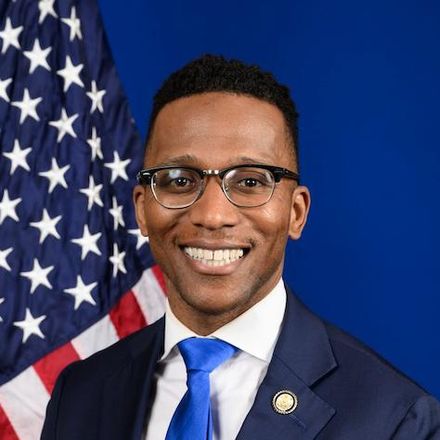
Congressman Christian Menefee
TX-18
What Comes Next
Attendees and the wider public now have a clearer view of the stakes, from data quality to governance, along with concrete ideas for building equity into healthcare innovation. The conversation is a starting point. Turning these ideas into standards, partnerships, and products will take sustained effort from across government, industry, and the communities these tools are meant to serve.
Sanofi chases the miracles of science to improve people's lives, and that goal depends on every community being able to access what science makes possible. The HealthStack session showed how much progress depends on who is at the table when decisions are made.
Explore more

Health Equity at Sanofi