Sanofi

The Air We Share: Science, Community, and Respiratory Health
Published on: October 15, 2026
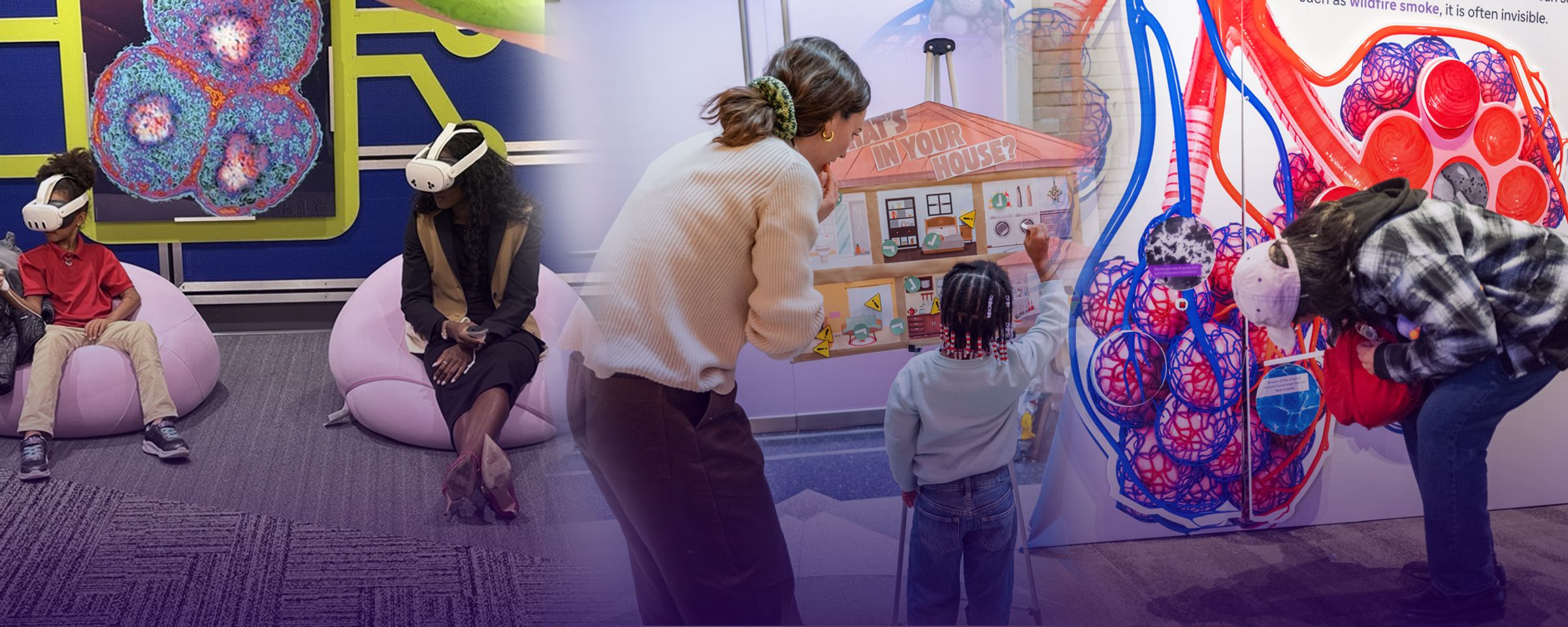
Collage of photos showing museum visitors, including children and families, taking part in hands-on The Air We Share exhibits at the Museum of Science in Boston, the Franklin Institute, and Liberty Science Center.
Visitors at the Museum of Science in Boston, the Franklin Institute, and Liberty Science Center explore hands-on The Air We Share exhibits.

Over the past year, Sanofi and the ASTC have worked together to build something special.. The Air We Share, Sanofi's partnership with the Association of Science and Technology Centers (ASTC), has brought air quality education to families across the country, specifically awareness of how air quality affects public health. Along the way, it has opened the door to science, technology, engineering, and mathematics (STEM) for young people in historically under-supported communities. As 2026 is nearing a close, let's take a look back at where the program started and share where it is heading.

Rooted in research

An ASTC survey found that 9 in 10 parents are concerned about air quality, yet many do not feel equipped to act on those concerns. That gap shaped The Air We Share from the start. Instead of assuming what families needed, the program was designed in response to the survey's findings.

Science comes alive at our anchor museums

Three leading institutions anchored the program in 2026, each bringing The Air We Share to life in ways that reflected their communities and their audiences. Together, the initial museum programming reached an estimated 13,000 people between May and September.
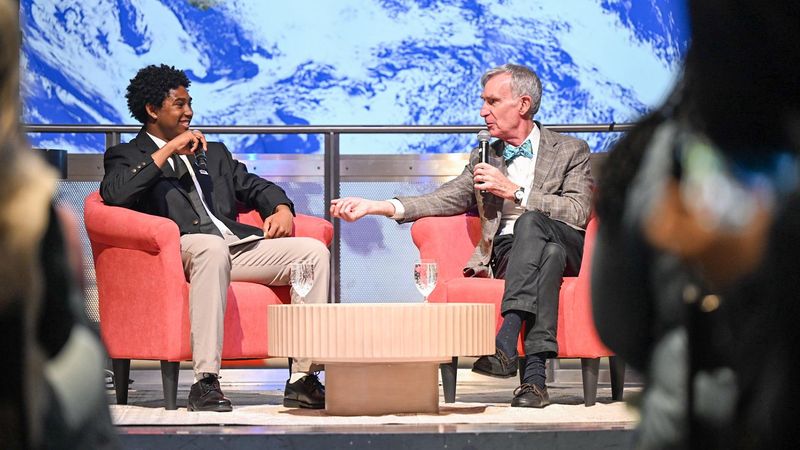
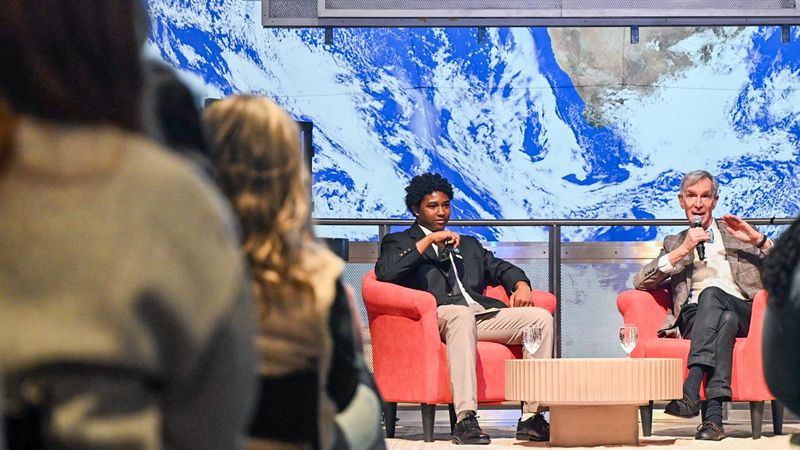
A Boys & Girls Club student sits on a stage interviewing Bill Nye the Science Guy at the Museum of Science in Boston in front of a live audience, discussing air quality and youth engagement.

Museum of Science, Boston

On May 8, families, students, and neighbors joined Sanofi colleagues, partners, and local leaders for the launch of The Air We Share at the Museum of Science, Boston, which welcomed approximately 3,500 visitors to the exhibit. Bill Nye the Science Guy took the stage for a fireside chat led by Andrew, a local Boys & Girls Club student, who led the discussion with curiosity. Sean the Science Kid brought his own energy to the day, sharing his enthusiasm for science with students and visitors throughout the museum, and visitors explored interactive pods, including Lungston's virtual reality experience.
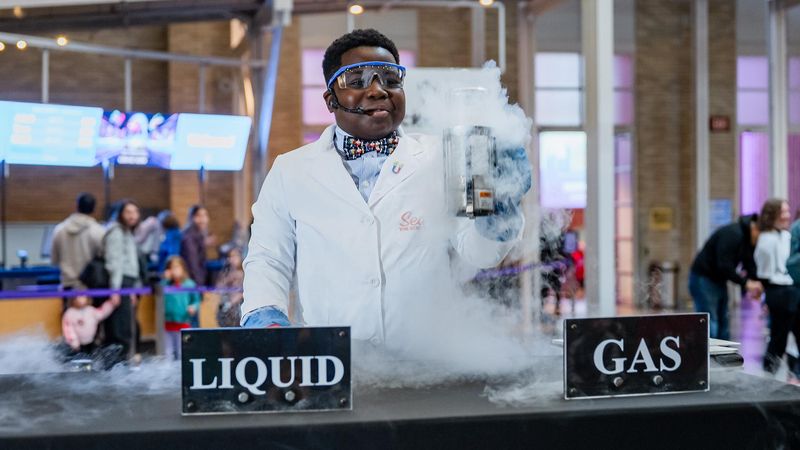
Sean the Science Kid, wearing a white lab coat, bow tie, and safety goggles, holds a steaming flask during a hands-on experiment with a Franklin Institute staff member at The Air We Share event, with table signs reading Liquid and Gas.

The Franklin Institute, Philadelphia

On September 26, Sean the Science Kid joined the event again, reminding everyone that science is for everyone, especially the next generation. More than 2,300 guests explored a large set of inflatable lungs, along with exhibits that connect the environment to respiratory health, sparking curiosity and plenty of conversation about the air around us. The day also brought together local leaders and changemakers for conversations on how Philadelphia can share resources and work together to prepare for regional and global air quality challenges.
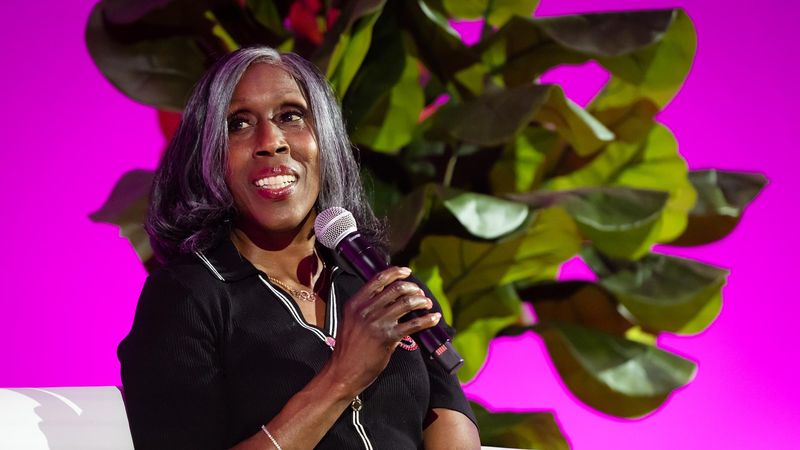
Joetta Clark Diggs takes part in the Liberty Science Center Community Evening for The Air We Share. Joetta is a smiling woman with gray hair in a black and white striped shirt, and speaks into a microphone. She sits on a white couch in front of a large green plant, with a blurred pink background.

Liberty Science Center, Jersey City

On October 7, Olympian Joetta Clark Diggs and her daughter, Adidas professional athlete and world champion, Talitha Diggs, shared how the environment shapes performance, health, and opportunity, on the track and off it. The evening was part of a Liberty Science Center Community Evening, so families could also enjoy activities well beyond the exhibits.

Reaching communities across the country

The Air We Share reaches well beyond these three anchor sites. A cohort of 14 science centers and museums across the country creates a network, with each designing programming that fits its local community. Across the cohort, programming has included a Clean Air Action Day, a two-week summer research camp where middle school students investigated air quality in their own neighborhood, and a kiosk paired with year-round programs for families. With hands-on, STEM-focused activities, these experiences make complex health topics approachable for every visitor.

"At its heart, The Air We Share is about making science accessible, relevant, and actionable for the communities we serve. We're not just helping young people understand the connection between their environment and their health. We're empowering them to ask questions, explore solutions, and recognize the role they can play in creating healthier communities," said Tasha Wright, Director, Volunteer Programs & Community Relations, Corporate Social Responsibility, who conceived and led The Air We Share.
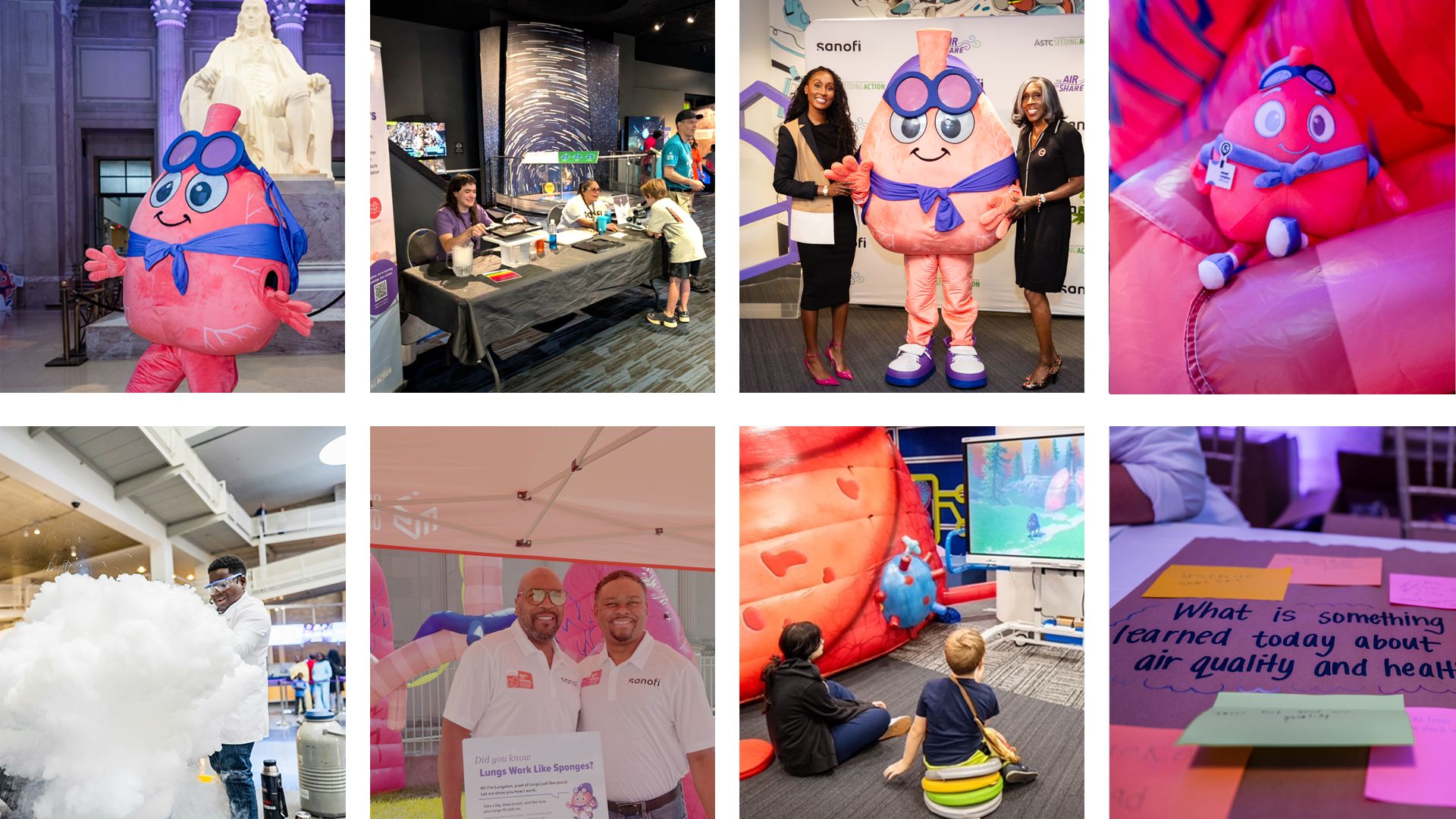
Collage of photos from community events at science centers and museums across the country, showing families and students participating in air quality and STEM activities: a pink lung mascot with museum visitors, kids exploring an interactive inflatable lung exhibit, a scientist demonstrating a vapor experiment, educators holding a sign reading 'Did you know lungs work like sponges?', and a handwritten note about air quality and health.

Families and students join community events at The Air We Share cohort science centers and museums across the country.

Meet Lungston, our guide to healthy lungs

Every great science adventure needs a guide, and ours is Lungston, the program's cartoon educational companion who helps young learners understand how their lungs work and why clean air matters.

When we ask questions about the air around us, we discover how much science is part of our everyday lives. This year, I met kids who asked big questions about the air around them, and families who left ready to do something about it. That is what makes me proud. When we learn together, we breathe easier together.
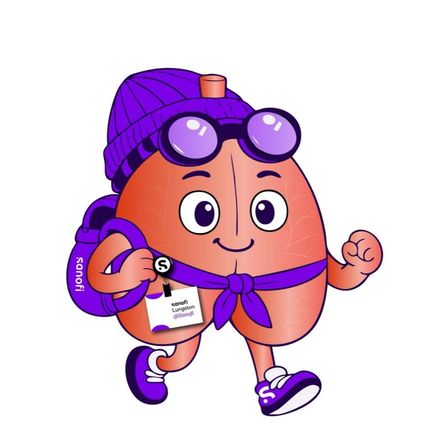
Lungston

Lungston

Educational Guide, The Air We Share

What comes next: The Sanofi STEM Challenge

The Air We Share is just getting started. In 2027, the program takes its next step with a hackathon-style student competition hosted by six science centers and museums. After learning how air quality affects respiratory health, young innovators will develop solutions to challenges in their own communities. The winners will compete on the national stage in late 2027 at the ASTC Annual Conference.

Think about what that means: a student who once wondered why the sky looked hazy could soon present a real solution to a national audience. That is the kind of moment that builds confidence in science.

Building a healthier future together

As The Air We Share continues to grow, it will give more families and students practical ways to understand their environment and take action for healthier communities. Because the air we share connects us all.

Explore more
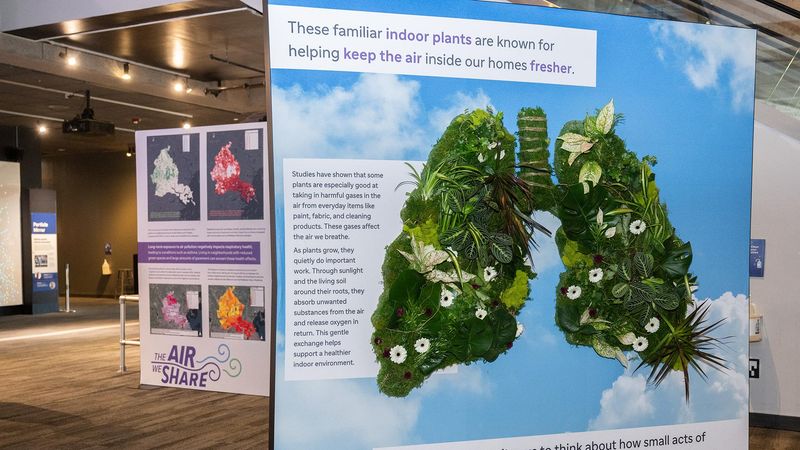
Large interactive museum display showing two lung-shaped installations made of living plants and greenery against a blue sky backdrop. Educational text explains how indoor plants absorb harmful gases from paint, fabric, and cleaning products while releasing oxygen. The display is part of 'The Air We Share' initiative, located in a modern exhibition space with additional informational panels visible.

The Air We Share

By working with science centers and museums across the United States, the program brings trusted, science-based information directly to communities, providing them with practical ways families can protect their health and make informed everyday decisions.
A Boys & Girls Club student sits on a stage interviewing Bill Nye the Science Guy at the Museum of Science in Boston in front of a live audience, discussing air quality and youth engagement.

Bringing The Air We Share to Communities
Earlier this year, Sanofi and the Association of Science and Technology Centers launched The Air We Share at the Museum of Science, Boston, bringing air quality education to families and young people nationwide. Read more about the launch and how it is turning awareness into action.
The logo for the Sanofi STEM Education Program features a purple atom icon with a flask at its center, alongside the phrase 'STEMulate Growth' with 'STEM' in black and 'ulate' in purple.

STEMulate Growth

The Air We Share is part of Sanofi’s STEMulate Growth program, our bold, overarching commitment to advance inclusion in STEM learning for students in historically under supported communities across the U.S.