Trust by Design: Building AI Everyone Can Believe In
Artificial intelligence (AI) will reshape healthcare faster than any technology in a generation. It is already speeding up drug discovery, supporting earlier diagnosis, and helping tailor care to individual patients. The risks are just as real. More than half the world's population still lacks access to essential health services, and nearly 90% of genomic datasets come from people of European descent. When communities are missing from the data, they can be missing from the care that AI helps deliver. When communities are left out of the development discussion, they can be left behind from the advances that AI can afford.
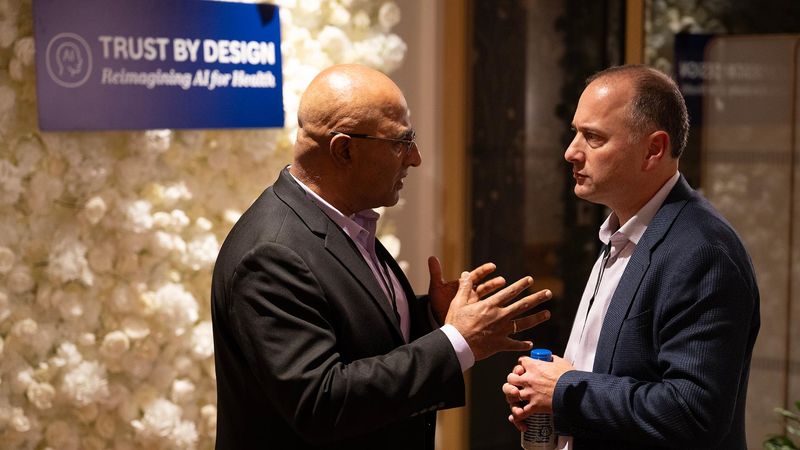
That tension was at the center of Trust by Design, a summit convened by Sanofi on November 12 in Morristown, New Jersey. For the first time, two of the company's signature events, the INC.Forum and the Trust, Inclusion & Equity (TIE) Summit, came together around a single question: how can we work to ensure foundations of trust are designed from the outset of AI healthcare transformation, long before the technology reaches patients.
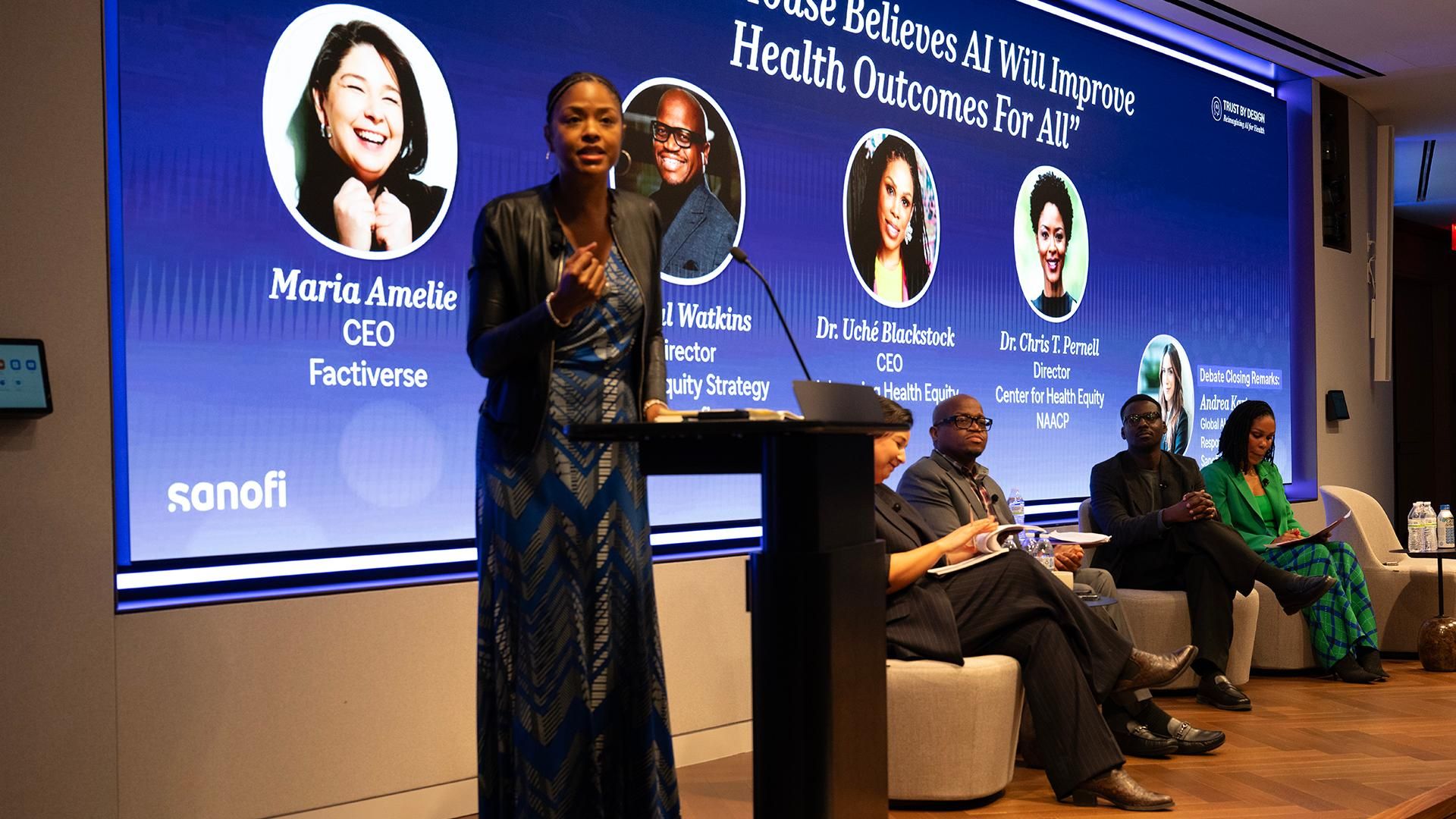
A lively, thought-provoking debate brought together diverse perspectives on both sides of the question: Will AI improve health outcomes for all?
Two Communities Meet Around a Shared Question
The INC.Forum has long been a space for global conversations about leadership and innovation. The TIE Summit has built its reputation on dialogue, community engagement, and health equity in the US. Bringing them together reflected a simple idea: the future of AI-enabled healthcare depends on whether patients and communities trust the systems being built, not only on technical breakthroughs.
Sanofi served as a convenor of the summit, which was designed as an open forum where leaders in healthcare, science, technology, community health organizations, and policy could speak candidly about the effects of rapidly advancing AI innovations on the patient journey. The aim was to move beyond conversation toward commitments, and the partnerships formed across sectors were central to that goal. No single organization can address the trust gap alone, and the event was built on that understanding.
The day started with a keynote from Dr. Rumman Chowdhury, founder and CEO of Humane Intelligence, who was appointed as the US Science Envoy for Artificial Intelligence and is former head of responsible AI at Accenture and Twitter. TIME named her one of the 100 most influential people in AI. Her work centers on testing AI systems independently, identifying bias before it causes harm, and holding developers accountable. In healthcare, she has argued, those questions carry particularly high stakes.
In healthcare, a flawed AI system does not just produce a bad recommendation. It can change whether someone gets diagnosed, treated, or believed. Trust has to be tested and earned before a system ever reaches a patient.

Dr. Rumman Chowdhury
Founder and CEO, Humane Intelligence, and US Science Envoy for Artificial Intelligence
Designing for Trust Before Technology Reaches the Clinic
By the time an AI tool arrives in an exam room, many consequential decisions have already been made. The data it learned from, the assumptions built into its design, and the governance surrounding it all shape whether people have reason to rely on it. The summit's first theme, Designed for Trust, examined how representative data, responsible development, and transparency can be built in from the start.
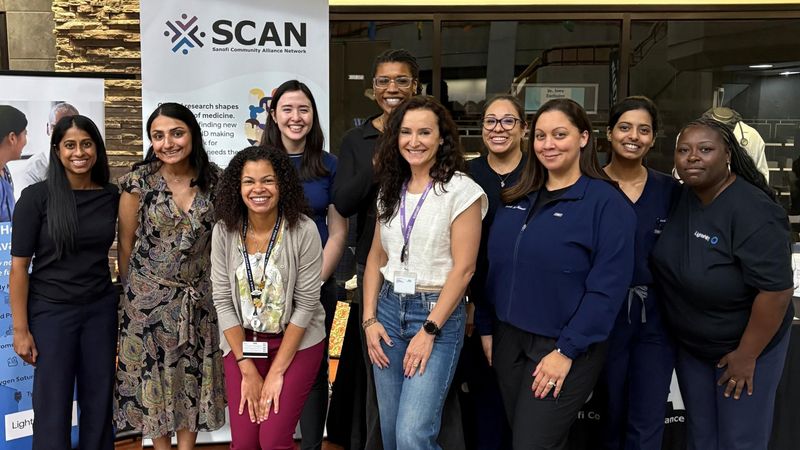
The program was grounded in turning principles into practice. Beth Brooks, Sanofi's Global Patient Engagement and Strategy Lead, held a fireside conversation with Dr. Elliot Shin of Pinnacle Research, bringing the patient perspective into the discussion of AI. Three health technology innovators followed with fast-paced lightning talks. Skinopathy presented an AI-powered skin health scanner, Pear Suite showcased a platform supporting community health workers, and Health in Her Hue shared its work reimagining health for women of color. Each innovator also hosted an Innovation Station during lunch, giving attendees a chance to see the tools up close and ask questions directly.
A Debate That Welcomes Disagreement
The midday session was an Oxford Union-style debate on the motion that AI will improve health outcomes for everyone. Purpose Union CEO Lewis Iwu moderated, and speakers argued the validity of both sides regardless of their personal views. The audience voted before and after the debate to see whether the arguments had shifted opinion.
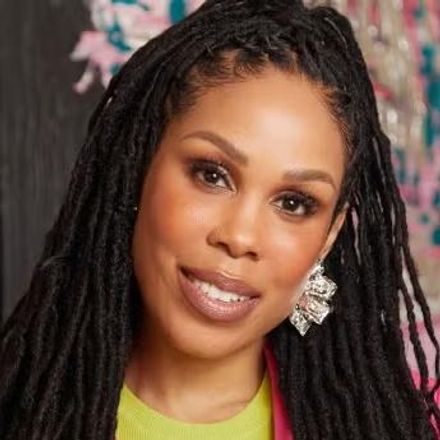
Dr. Uché Blackstock, a physician and founder of Advancing Health Equity, took part in the debate. Her work has long examined how structural bias shapes who receives care and who is overlooked. Applied to AI, that perspective raised a practical question for developers and health systems alike: who is missing from the data, and who was never part of the design process?
If we are not asking who is missing from the data and who was never invited into the design process, then we are not building technology for everyone. We are automating the inequities that already exist.
Dr. Uché Blackstock
Physician and Founder, Advancing Health Equity
Sanofi included opposing views deliberately. Hearing the strongest arguments on each side helped the audience weigh the conditions under which AI could contribute to more equitable care, and it gave the conversation room to move past easy answers.
From Conversation to a Shared Charter
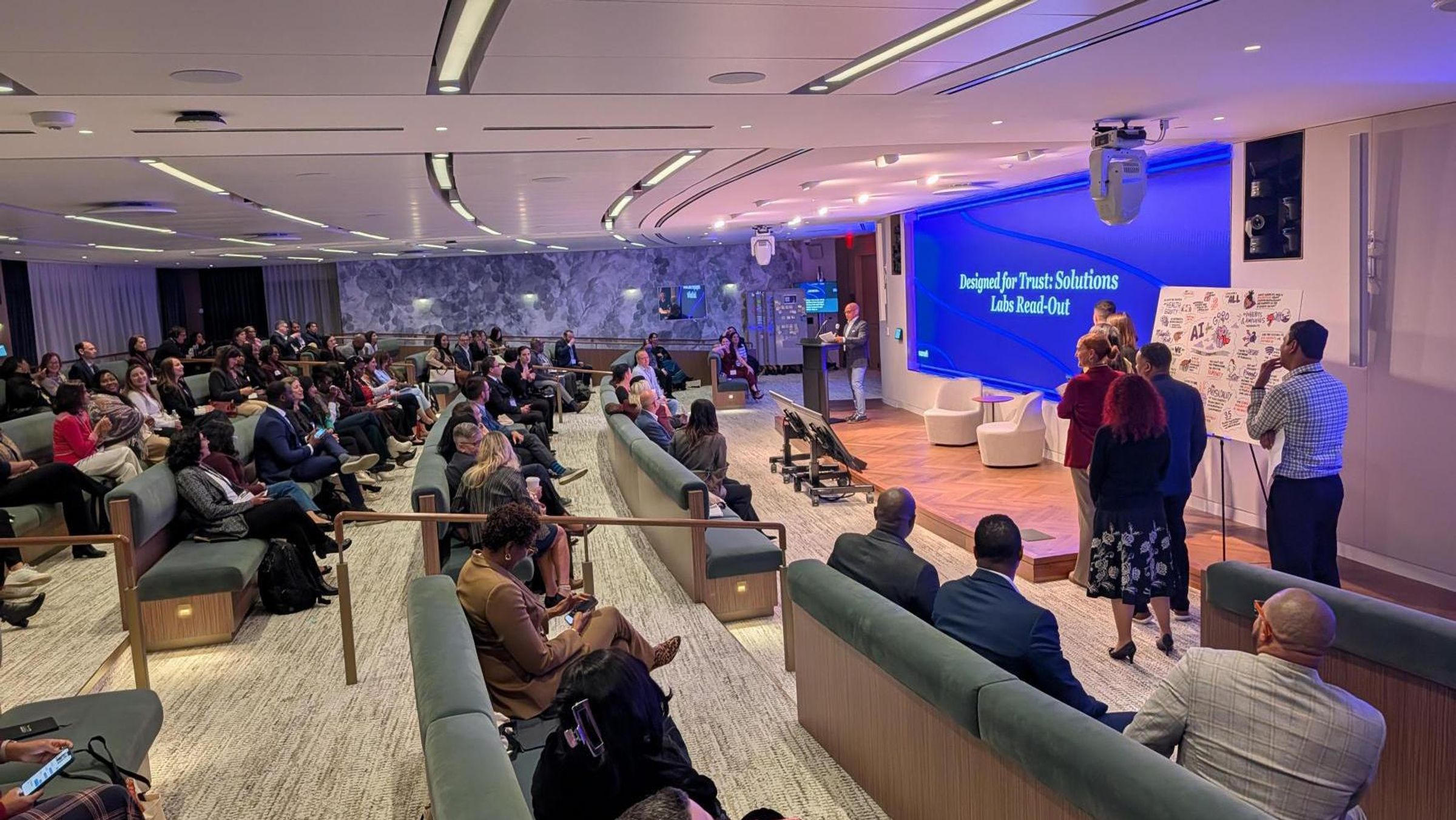
The afternoon centered on action. In the Solutions Labs, participants dove into relevant topics to solve for real world challenges both at Sanofi and across the healthcare ecosystesm. Labs ranged from building practical AI skills attendees could bring back to their teams, exploring an NAACP and Sanofi co-created white paper on designing AI to improve equity in healthcare, tackling how to use AI responsibly for the consumer experience, and more. Groups worked through a structured process, identifying where trust is built or lost, defining the problem, generating ideas, and testing solutions against realistic situations.
The day closed with the launch of the Trust by Design Charter. The Charter was designed to outlast the summit as a practical reference for Sanofi and its partners, and everyone in the room had the opportunity to sign it.
For community leaders working on health inequities, policymakers weighing how AI should be governed, and those at Sanofi applying AI to their everyday work for patients, Trust by Design offered a view of how these questions can be tackled together. Sanofi chases the miracles of science to improve people's lives, and making sure those advances reach everyone begins with the trust built before the technology does.
Explore more
A Million Conversations

Health Equity at Sanofi